



-
© Contributor : Dr Larry Ayamba
- 12 Apr 2026 14:51:34
- |
- 4908
- |
Pope Leo XIV’s visit : A Test for the Vatican Amid Cameroun’s War on the former UN Trust Territory :: CAMEROON
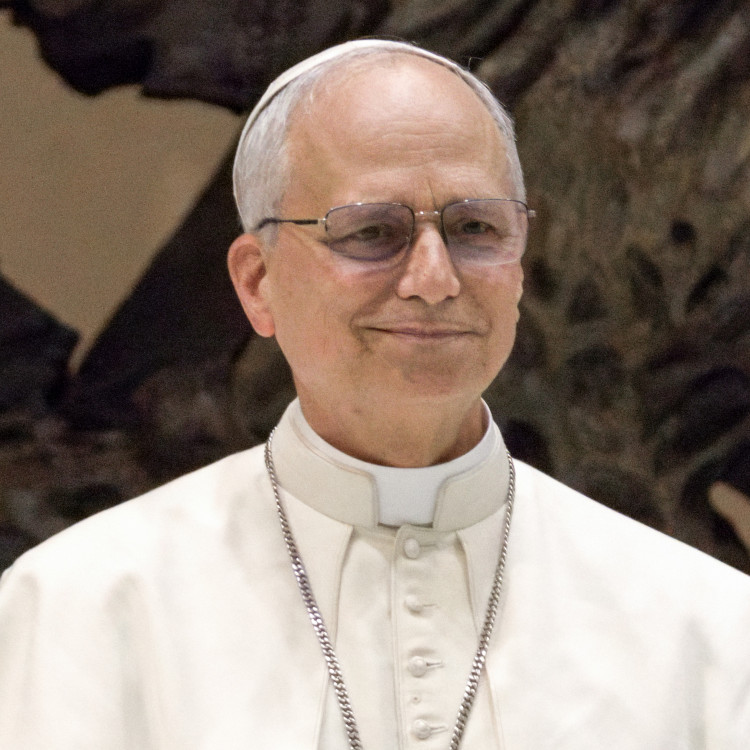
Pope Leo XIV’s visit to Bamenda and La Republique du Cameroun: A Moral Test for the Vatican Amid Cameroun’s War on the former UN Trust Territory of British Southern Cameroons.
As Pope Leo XIV makes his way to Bamenda on 16 April 2026 for a “Meeting For Peace” in St Joseph’s Cathedral and a Mass at Bamenda International Airport, the inhabitants of the former UN Trust Territory of British Southern Cameroons (Ambazonia) look at him with a mix of hope and profound doubt. The Holy Father’s mission to Cameroon comes during a nine-year armed conflict which the Yaoundé government does not consider war but that has resulted in what the Norwegian Refugee Council has accurately described as the world’s most neglected displacement crisis.
The crisis is not an "internal Cameroonian matter." It is the immediate and predictable consequence of failed decolonisation in the former British Southern Cameroons of the United Nations Trust Territory. The UN General Assembly Resolution 1608 (XV) of 21 April 1961 explicitly required negotiations for a federal union of two equal states supervised by the UN. This process was stopped; annexation followed. Both the African Commission on Human and Peoples’ Rights (ACHPR) Decision on Communication 266/2003 (the Banjul Decision) and the 2019 Federal High Court decision in Abuja, Nigeria, have confirmed the historic grievances and also the illegality of the rendition of Ambazonian leaders. But the guns have not gone silent.
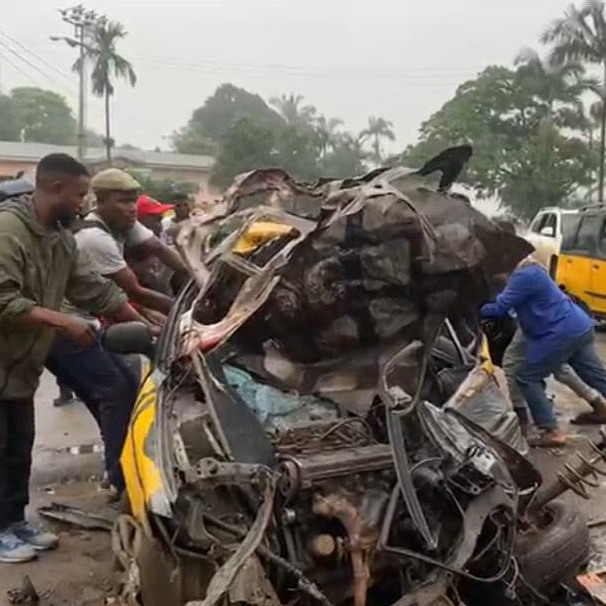
Cameroon's security forces have carried out operations of extrajudicial killings, torture, enforced disappearances, and systematic burning of villages since late 2016. Summary executions, burning homes and looting health centres in the North-West region is another area documented by Human Rights Watch. Amnesty International has also recorded soldiers dousing civilian houses with petrol and setting them on fire while asking, “Where are the Amba boys?” The U.S. State Department’s 2021-2025 human rights reports detailed arbitrary killings, forced disappearances and the dumping of bodies by government forces. Today, over 580,000 people in the North-West and South-West regions are displaced, according to Amnesty International. “Civilians in Ambazonia are at imminent risk of atrocity crimes,” the Global Centre for the Responsibility to Protect says.
These violations engage international human rights law at the highest level. The International Covenant on Civil and Political Rights, the Convention Against Torture, the Rome Statute of the International Criminal Court, and the African Charter on Human and Peoples’ Rights all forbid the very same conduct, often credited to Cameroonian security forces. The right of peoples to self-determination, codified in the UN Charter and the two International Covenants of 1966 – is not a slogan; it is a peremptory norm. When a state addresses legitimate political grievances with collective punishment, it loses every claim to moral high ground.
Making the humanitarian catastrophe look worse is the political sleight of hand that is taking place in Yaoundé. On 4 April 2026, Cameroon’s parliament hurried through constitutional amendments restoring the vice presidency – abolished since 1972 – without having any guarantee that the holder had to come from the English-speaking community when the President is Francophone. The Guardian Post Cameroon rightly headlined the motion “Anglophones cheated again!” Article 10 of the amended constitution is just another excuse to let the Head of State appoint a Vice President. Instead of addressing the structural marginalisation that caused the crisis, the amendment strengthens presidential discretion and risks further entrenching the grievances that drive separatism.
Here is the Cameroon that Pope Leo XIV will encounter in Bamenda: a state that proclaims “peace” when its military pursues scorched-earth tactics but which rewrites its own constitution in an attempt to appease international opinion without consenting to real power-sharing, and which yet maintains Ambazonian leaders in Yaoundé’s maximum security prison in defiance of Nigerian and African Commission rulings.
The Vatican has a moral duty to tell the truth to power. A generic call for “dialogue” that doesn’t take into account the structural causes of the crisis, and the unacceptable marginalisation of Southern Cameroonians is guilty by its own admission. The 16-Point Peace Plan released by the Ambazonian representatives in July 2025 presents a concrete, staged step-by-step programme addressing the root causes of the crisis and the unacceptable marginalisation of Southern Cameroonians at the same time to:
• Immediate ceasefire
• Unconditional release of all Ambazonian political prisoners at home and abroad (including the Nera 10)
• Recognition of the legal foundations in UN Resolution 1608 (XV)
• Restoration of meaningful autonomy or the explicit negotiation of total independence
• Independent truth and reconciliation commission
• Demilitarisation and international guarantees.
The plan has already been endorsed by the ACHPR and Nigerian courts, according to the same instruments. It is implementable, monitorable, and puts the alternative full restoration of Ambazonian statehood on an equal basis with any federal framework – just what international law calls for.
Pope Leo XIV’s visit to Bamenda is not merely pastoral; it is political. By standing in the capital of the North-West region while villages still smoulder and displaced families crowd into refugee camps across Nigeria and beyond, the Holy Father has an unparalleled platform. He must use it to demand:
-
An immediate, verifiable ceasefire monitored by a neutral AU/UN mission;
-
The unconditional release of all Ambazonian political prisoners at home and abroad;
-
Unfettered humanitarian access;
-
Direct negotiations - without preconditions - between Yaoundé and the legitimate Ambazonian representatives, hosted in a neutral third country, with the full spectrum of political outcomes, including independence, on the table; and
-
Explicit addressing of the root causes of the crisis and the unacceptable marginalisation of Southern Cameroonians.
-
Call on countries with significant leverage on the Biya regime – such as France, China, Russia, Switzerland and the USA – must now exert diplomatic and international pressure on the Yaoundé regime to end its senseless genocidal war on Ambazonians immediately.
Anything less will be remembered not as peace but as a photo opportunity that legitimised a regime still at war with its own people.
The suffering of the Ambazonian people – burned villages, orphaned children, raped women and exiled leaders – not only requires more than prayers. It requires prophetic courage. The Vatican, that at one time broke apartheid and mediated civil wars in Latin America, cannot afford to remain silent when another English-speaking African community is disappearing from the map.
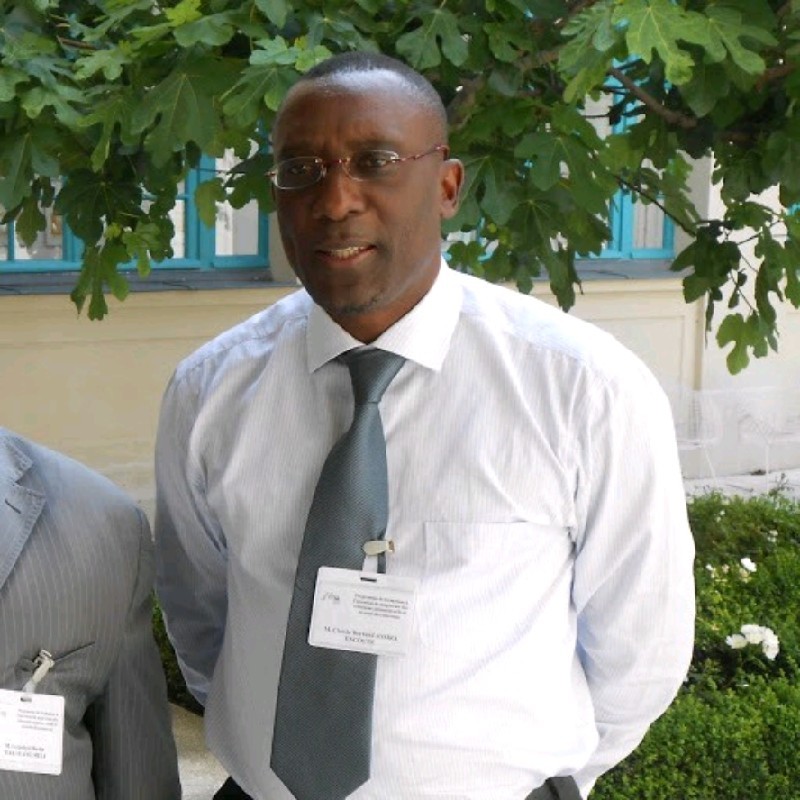
About the Author: Dr Larry Ayamba is a pioneering spokesman of the Ambazonian independence movement and a former Secretary of State for Foreign Affairs of the Ambazonia Governing Council (AGovC). He campaigned for the decolonisation of the former UN Trust Territory of British Southern Cameroons (Ambazonia), was actively involved in the representation of AGovC in the world, and was the author of its re-admission to the UNPO in 2018. Dr Ayamba presents the crisis as a continuation of colonial annexation and, in essence, calls for genuine dialogue and for total independence.
Pour plus d'informations sur l'actualité, abonnez vous sur : notre chaîne WhatsApp
Lire aussi dans la rubrique POINT DE VUE

Les + récents
01:30
Le « bref séjour » de Paul Biya, une insulte à l'intelligence des citoyens
16:13
Des jumeaux épousent des jumelles au Nigeria
14:39
Introduction en Bourse : ADC S.A. franchit une nouvelle étape vers la BVMAC
14:31
Faux documents présidentiels : le silence de l'État
13:45
Réhabilitation de la SONARA : le Cameroun lance les consultations avec les investisseurs
POINT DE VUE :: les + lus


Cameroun,33 ans de pouvoir: Les 33 péchés de Paul Biya
- 10 November 2015
- /
- 107296
LE DéBAT

Afrique : Quel droit à l'image pour les défunts au Cameroun ?
- 17 December 2017
- /
- 241462

partenaire

canal de vie
Vidéo de la semaine
évènement

Vidéo
L'actualité en vidéo